📄 Digital book in PDF · read it on your phone or print it
Site survey, separation distances, mortar racks, electric firing, misfires, storage and the final sweep, one topic per page: the drawing first, then what you need to remember. Built on NFPA 1123 (2022), with every distance and wait time flagged to check against your state's rules. 64 illustrated pages.
🔒 Secure checkout · PDF by email · 30-day guarantee
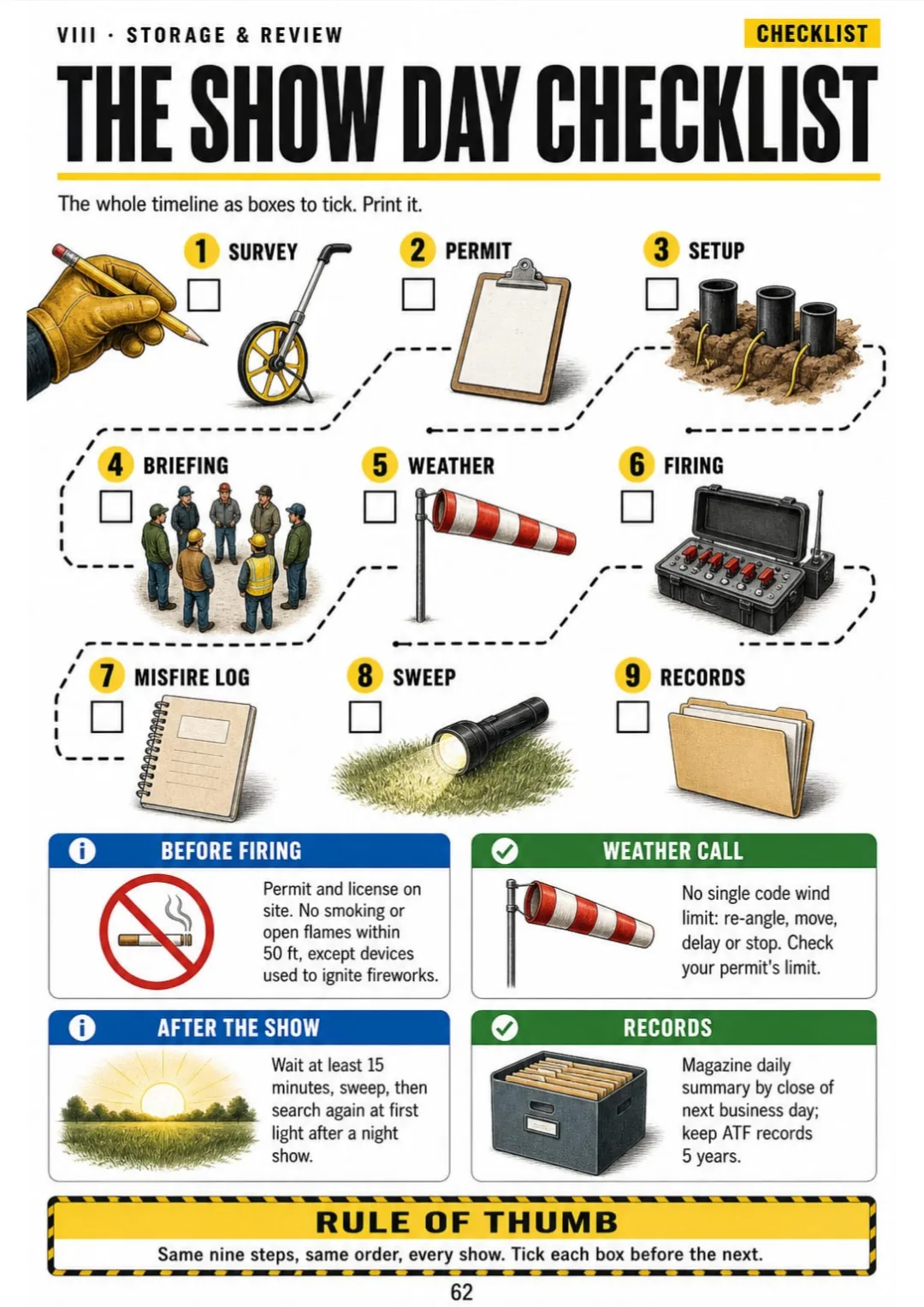
Every page has one big drawing and a box with the distances, numbers and steps you need to know:


Swipe to see more →
These are real pages from the book. The table of contents is the full one: 8 parts and 60 topics.
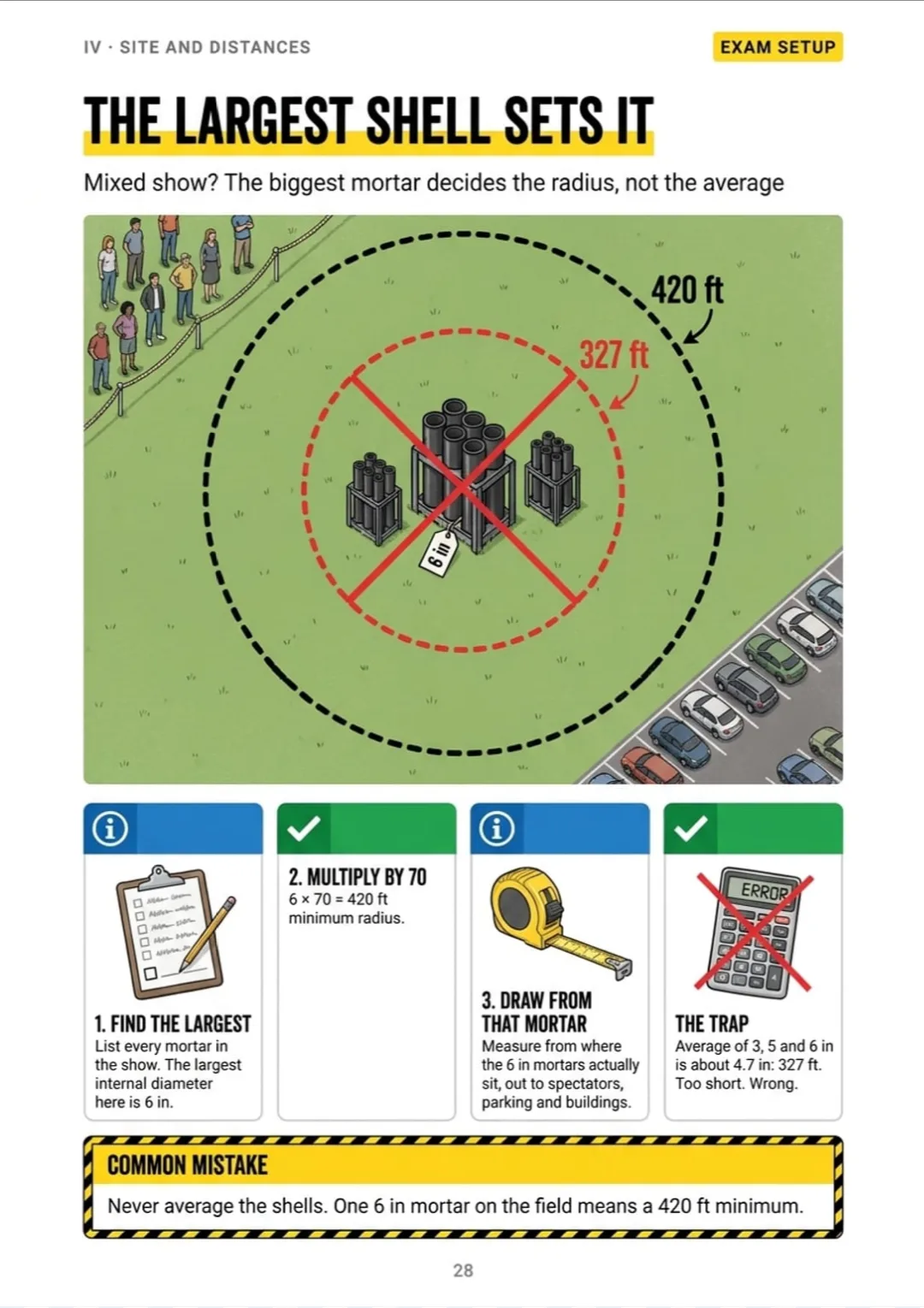
You're on the field with a mixed setup: 3-inch, 5-inch and 6-inch mortars. The fire marshal asks how far back the crowd line has to go.
You've read the separation distance section. But the code gives it to you in articles and exceptions, and nobody spells out which mortar actually sets the radius.

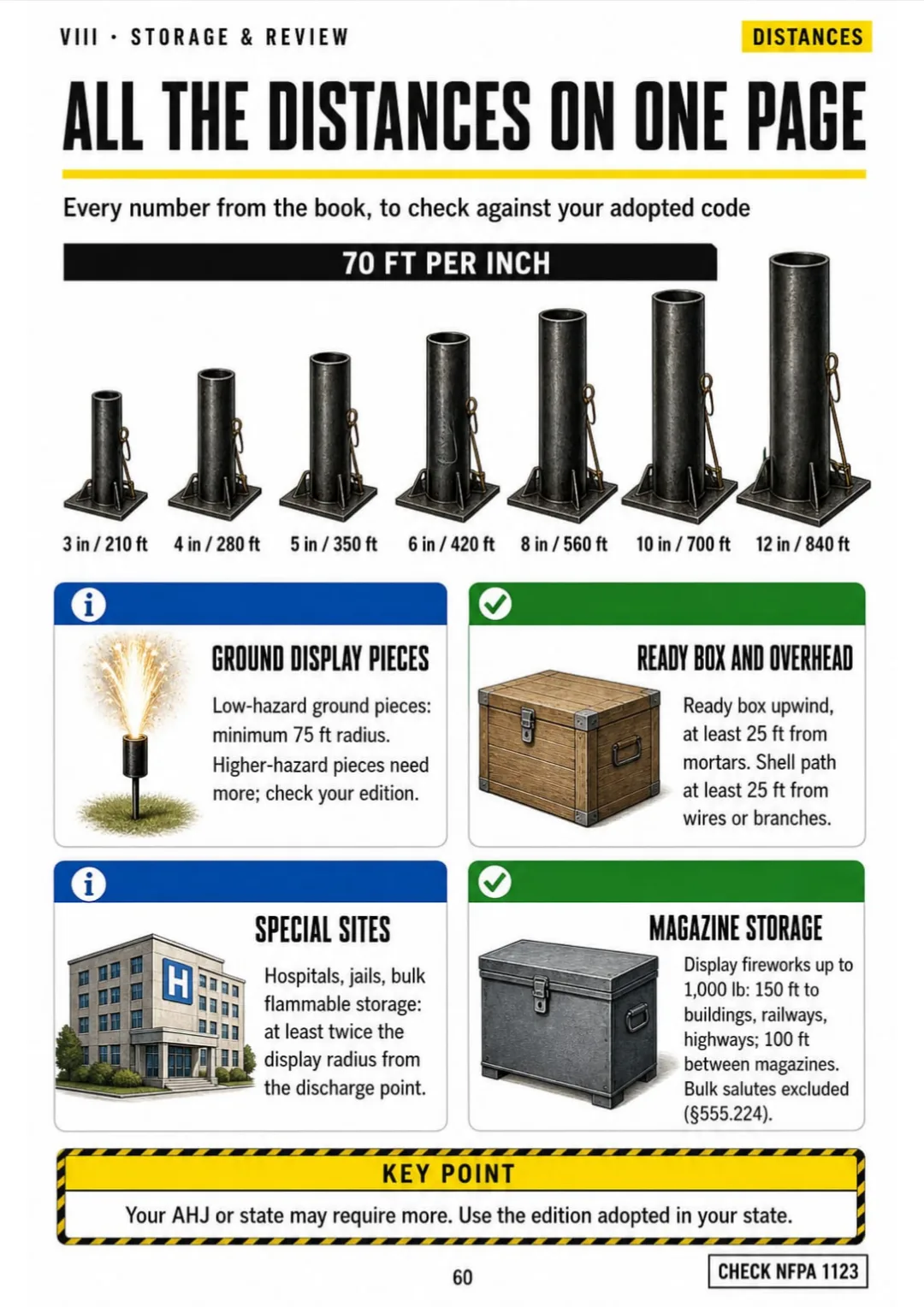
Here, that question is one page. The three mortar sizes are drawn on the site, and the box shows the math: the largest shell sets it, 6 × 70 = 420 feet, never the average.
The same goes for the rest, each on its own page: the 1.3G vs 1.4G placard rule, buried vs racked mortars, series and parallel firing circuits, the misfire procedure and the show day checklist.
So you see the answer, you know why it's right, and you give it on site without flipping back to the code.

The show as one timeline, rules and licenses, the product, site survey and distances, mortars and racks, firing the show, misfires and the sweep, storage and review: 64 pages, all illustrated.
Think of it this way:
It's the morning of the show. The racks are going in, the fire marshal is walking the field, and you need to confirm the crowd line before anything else happens.
You open the book to the distances page and it's all drawn: 70 feet per inch of mortar, from 3 inches at 210 feet up to 12 inches at 840 feet, with the ready box 25 feet upwind.

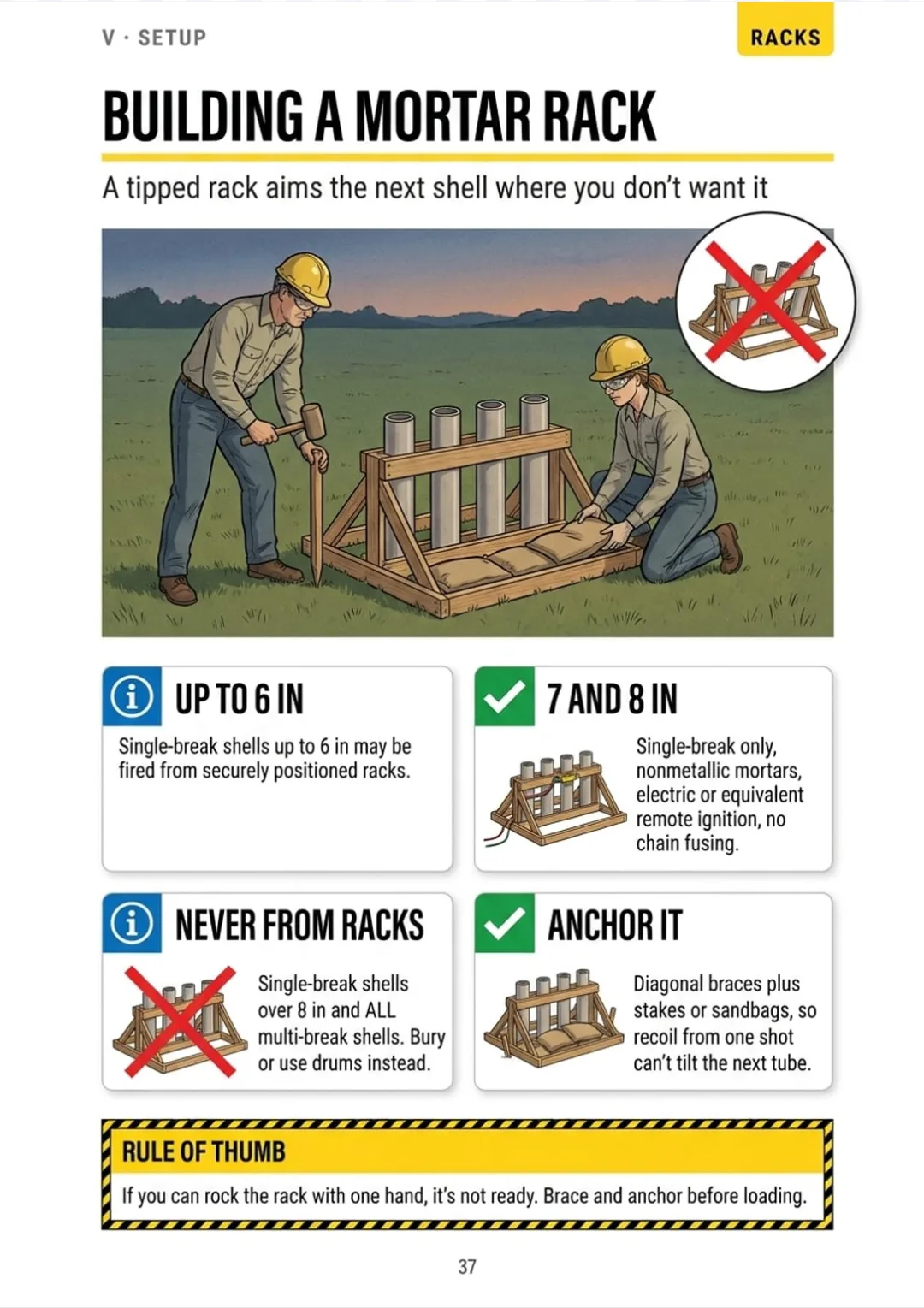
The same with mortar racks, firing circuits, misfires, the 1.3G placard rule and the post-show sweep: each one on its own page, in the order you work a show.
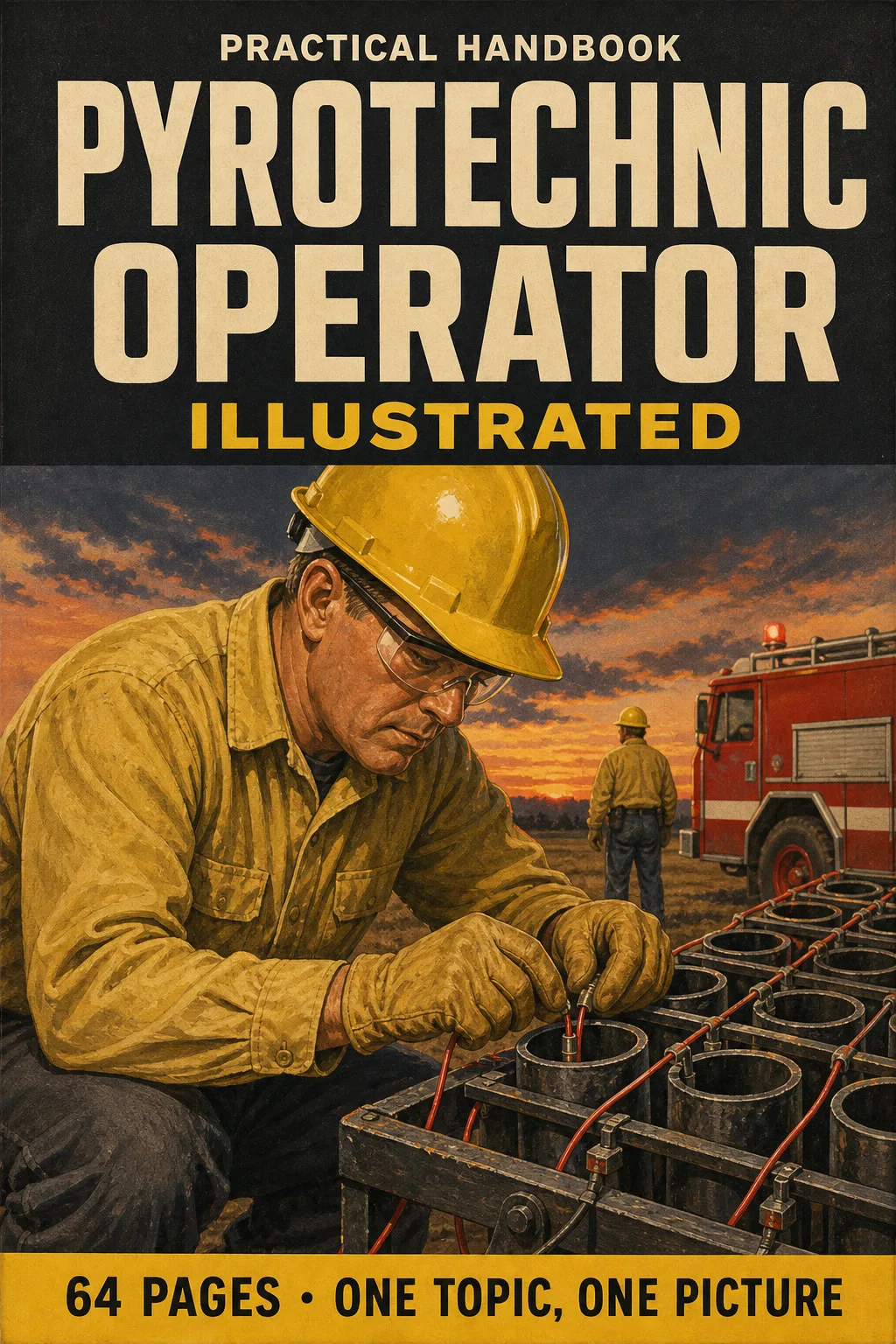
Pyrotechnic Operator Illustrated is 8 parts and 60 topics, all drawn, with one-glance review tables, the show day checklist and the questions the fire marshal may ask at the end.
What you see drawn, you don't have to memorize.
The whole display on one line, who's who on show day, the four zones of a site, the words the exam uses and what changes from crew to operator.
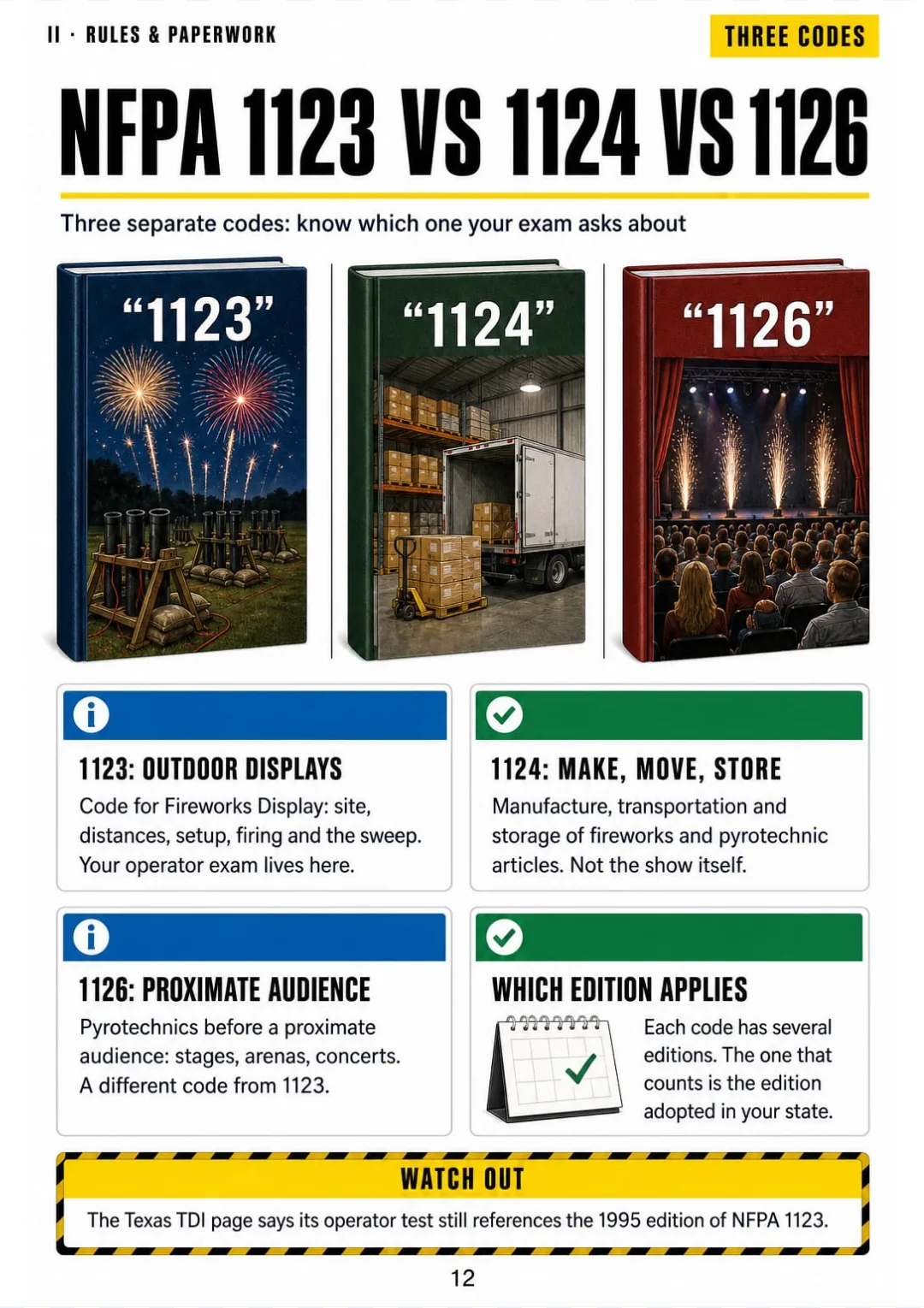
The layers of rules, NFPA 1123 vs 1124 vs 1126, 1.3G vs 1.4G, the ATF license or permit, your state operator license, the display permit and the records you keep.
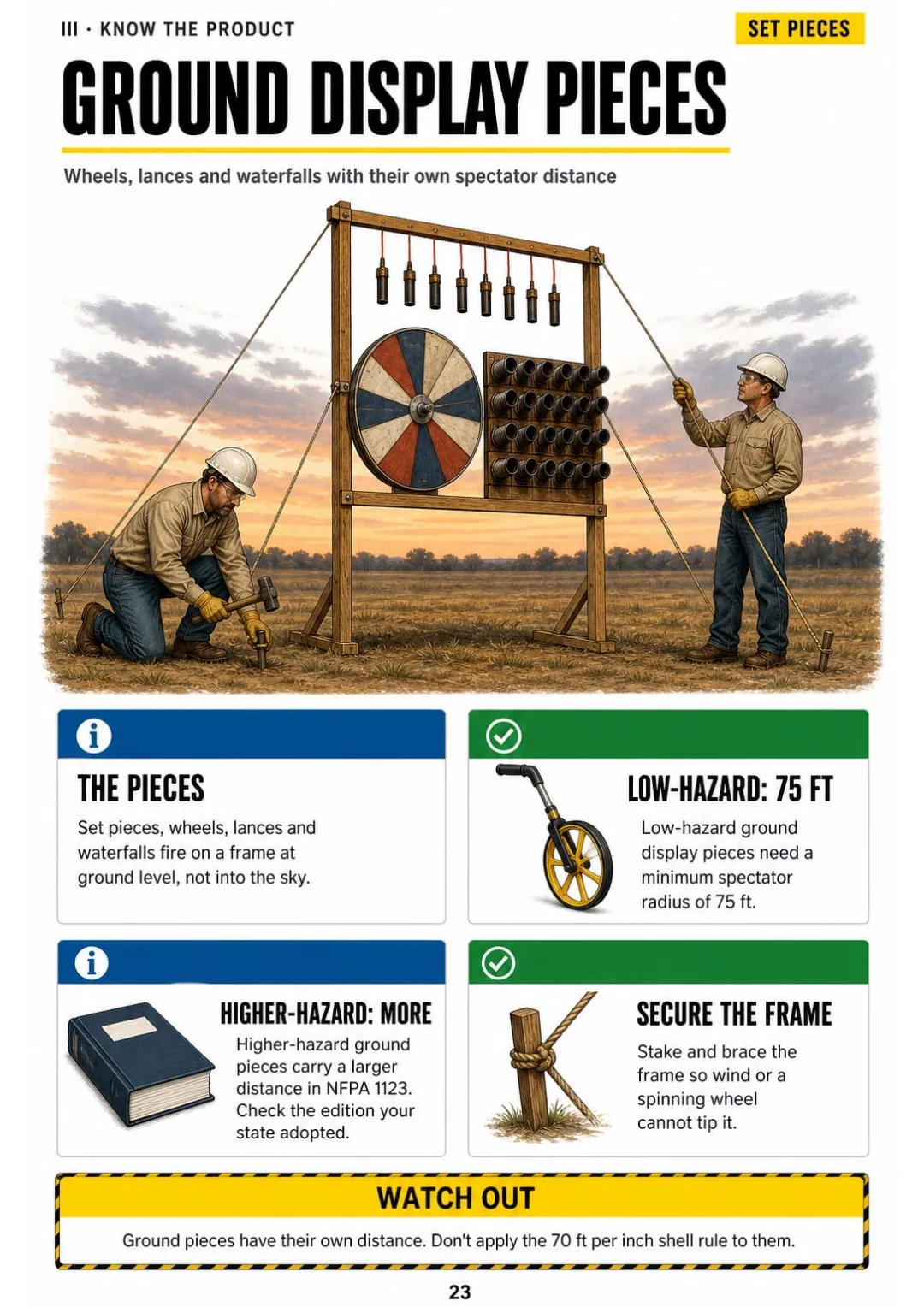
Anatomy of an aerial shell, spherical vs cylindrical, shell size and mortar size, salutes, comets, mines, cakes, ground pieces and how to read labels and shipping papers.
Walking the site survey, the 70 feet per inch rule with worked distances, which shell sets the distance, where to measure from, angled mortars, the site plan, water and rooftop sites, and weather go/no-go. So you can confirm the crowd line before the first rack goes in.
Mortar materials, length and inspection, buried vs racks vs drums, building and chain-fusing a rack, ready boxes, loading a shell safely and weather protection.
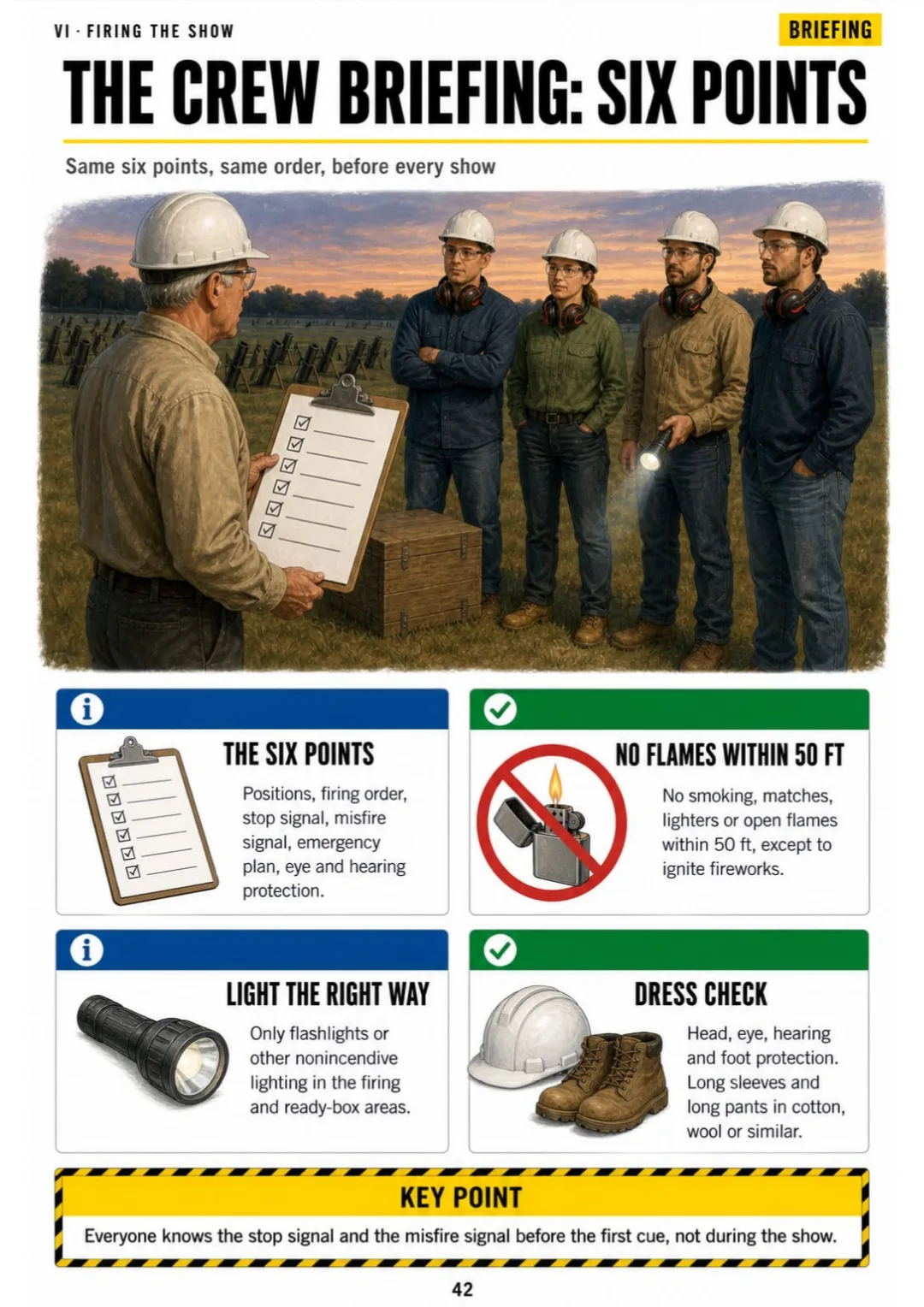
The crew briefing, manual firing body position, the electric firing system, Ohm's law with simple numbers, series and parallel circuits, continuity testing, arming and when to stop the show.
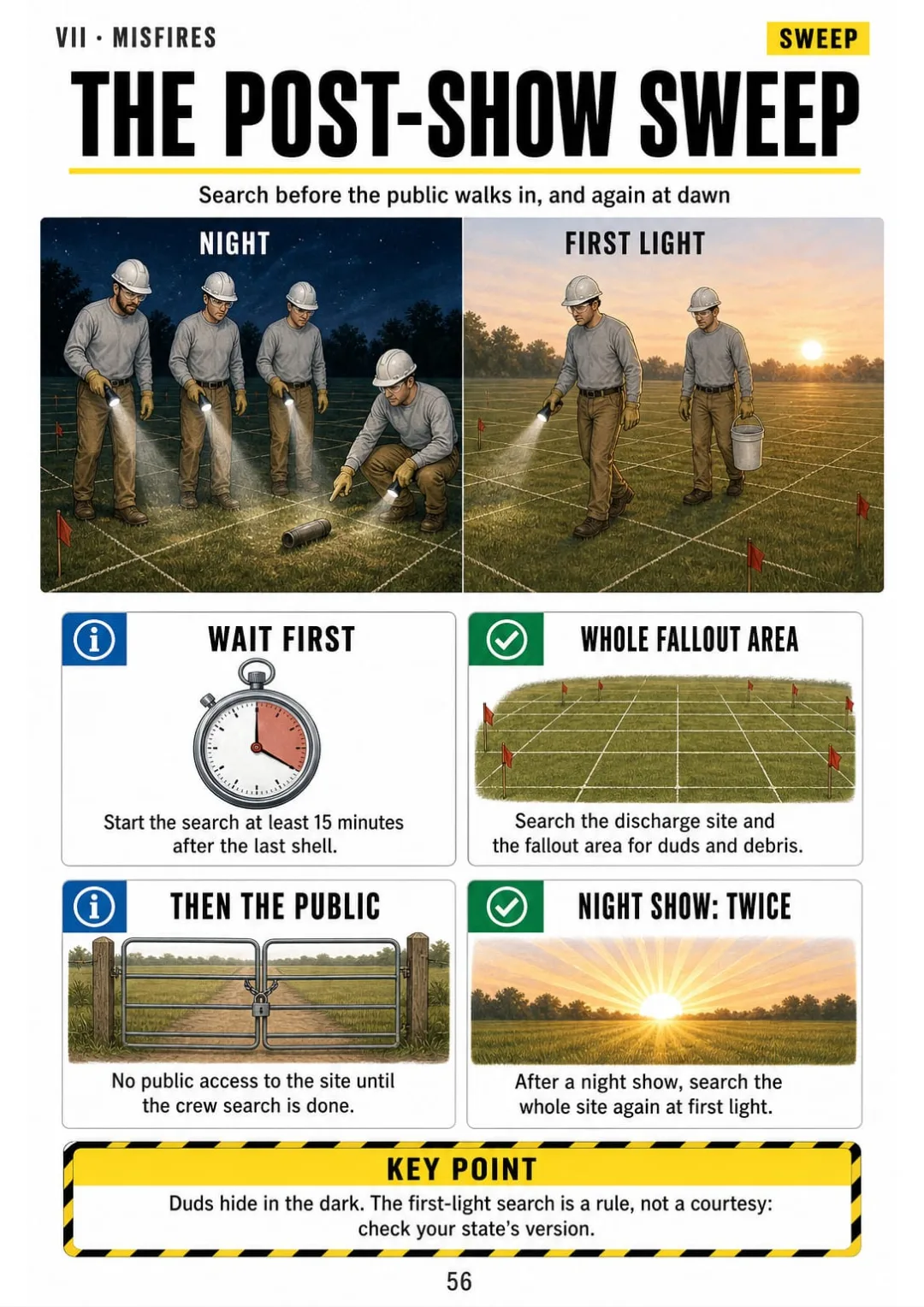
Misfire vs dud vs low break, handling a misfire, misfires in electric shows, fire in the field, the incident plan, the post-show sweep, disposal and return to storage.
ATF magazine types, DOT transport basics, one-glance tables for distances and circuits, the show day checklist, frequent field mistakes and questions the fire marshal may ask.
At the end of the book: One-glance tables for distances and circuits, the show day checklist and the questions the fire marshal may ask.
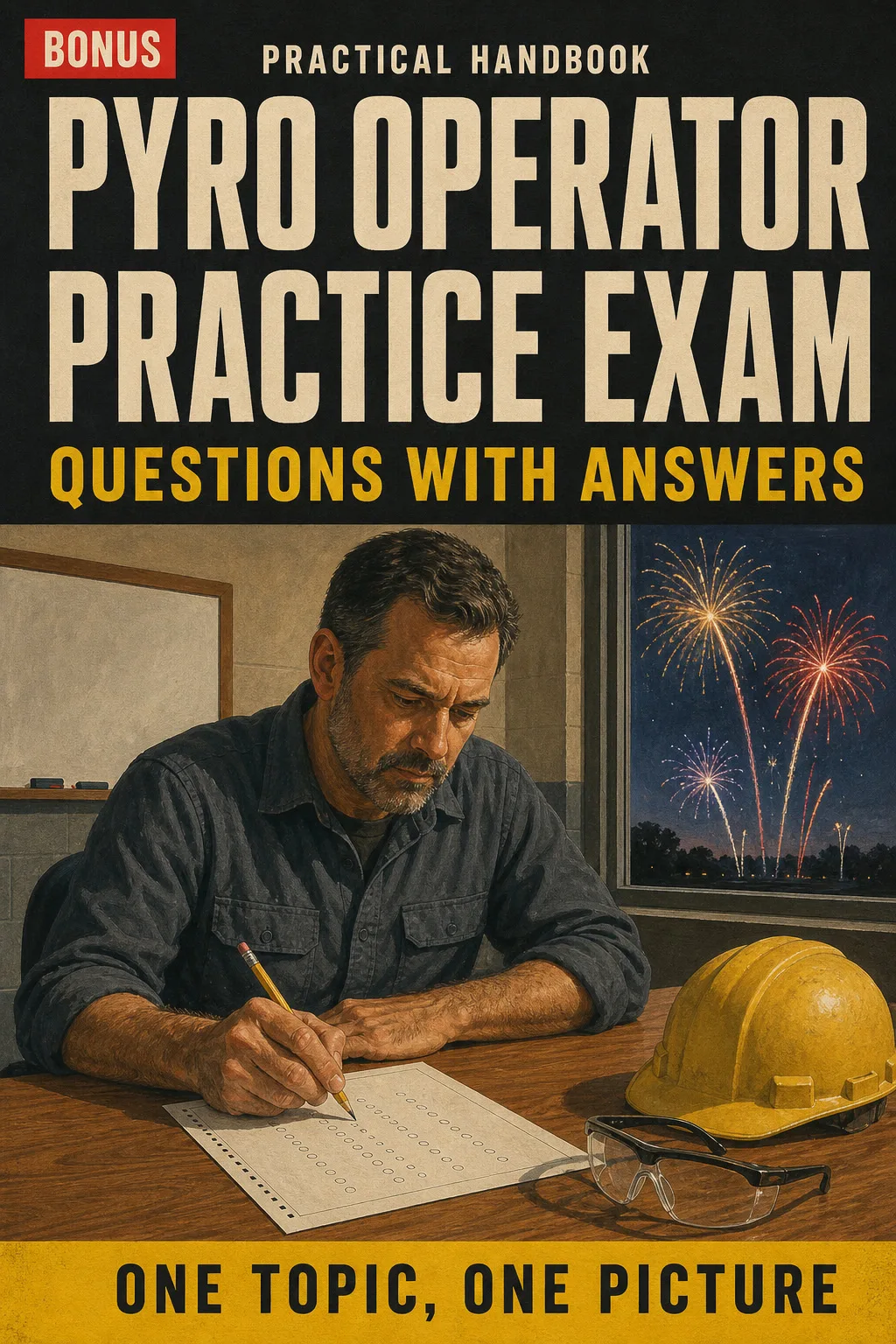
Practice with exam-style questions on laws, distances, firing systems and misfires, each answer explained and linked to the page where it's drawn.

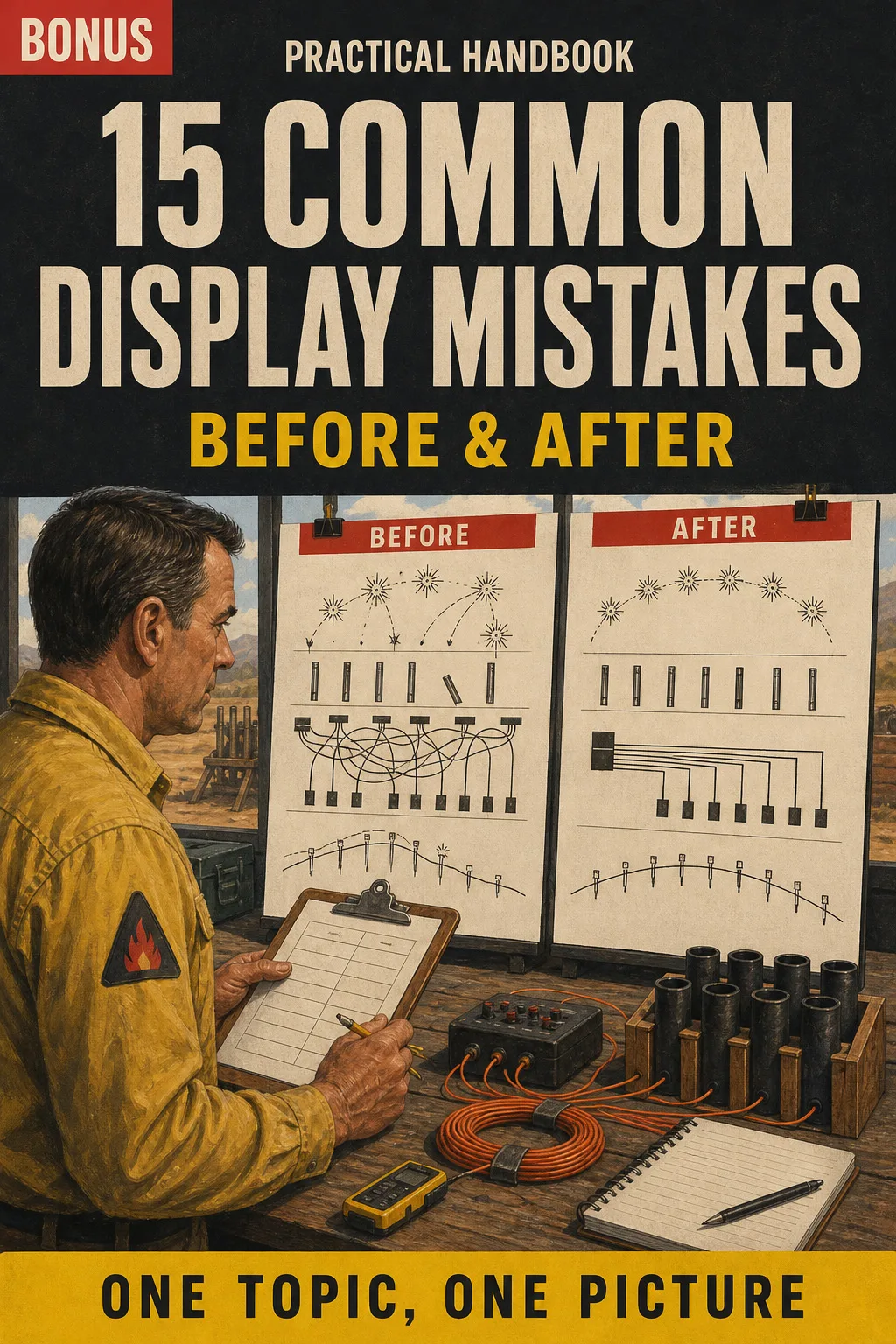
See the most frequent setup and firing mistakes drawn side by side with the correct version, so you can review them in minutes before the exam or the show.
📄 This is a digital PDF book sent to your email: nothing is printed or shipped.
PDF by email: We email you Pyrotechnic Operator Illustrated as a PDF, together with the two free books. It's a single payment: no installments, no extra charges.
You already load mortars and run wire. The book puts what you do into one sequence, with the rule behind each step drawn on its page.
Distances in feet, misfire wait times, circuits and permits, each on one page you can review at a glance. The practice exam lets you check yourself before test day.
Print the pages you use most and keep them in the truck. When the fire marshal or a new crew member asks, the answer is one page away.
📄 This is a digital PDF book sent to your email: nothing is printed or shipped.
Try Pyrotechnic Operator Illustrated for 30 days, bonus books included.
We refund everything if the file won't open, if the book isn't what you see here, if you were charged twice or if the email doesn't arrive. Just email us.
You pay once. No subscriptions.
Yes. It doesn't teach you to carry a mortar: it puts the whole show in order and draws the rules, distances and numbers the exam and the fire marshal ask about.
It's built on the rules every state starts from: NFPA 1123 (2022 edition), ATF rules (27 CFR Part 555) and DOT hazmat rules (49 CFR). State licensing rules vary, so every distance, wait time and number is marked to check against your state fire marshal's rules.
No. It's an independent illustrated study book. It isn't published or endorsed by NFPA, ATF, DOT or any state fire marshal.
No. It doesn't replace supervised hands-on training, your state license or the permits required for a display, and it doesn't give you a certificate or count as training hours. It helps you study and review.
No. They're written for this book in the exam's style, and each answer points to the page where the topic is drawn.
The book and the 2 bonus books come as PDFs by email, to the address you enter at checkout.
No. It's a one-time payment. No subscription.
Yes. It's a PDF ready to print, so you can keep the pages you need in a binder or in the truck.
You have 30 days. We refund everything if the file won't open, if the book isn't what you see on this page, if you were charged twice or if the email doesn't arrive: just email us.
No more rereading the code and having nothing stick.
The 70-feet-per-inch rule: you see it drawn and you've got it.
You walk into the exam knowing where everything is.
Drawings make studying faster.
The book is right below.
One-time payment: US$ 27 · Guarantee: 30 days · PDF by email
YES, I WANT PYROTECHNIC OPERATOR ILLUSTRATED FOR US$ 27📄 This is a digital PDF book sent to your email: nothing is printed or shipped.